
Capillary & Spider Vein Removal
Capillary & Spider Vein Removal
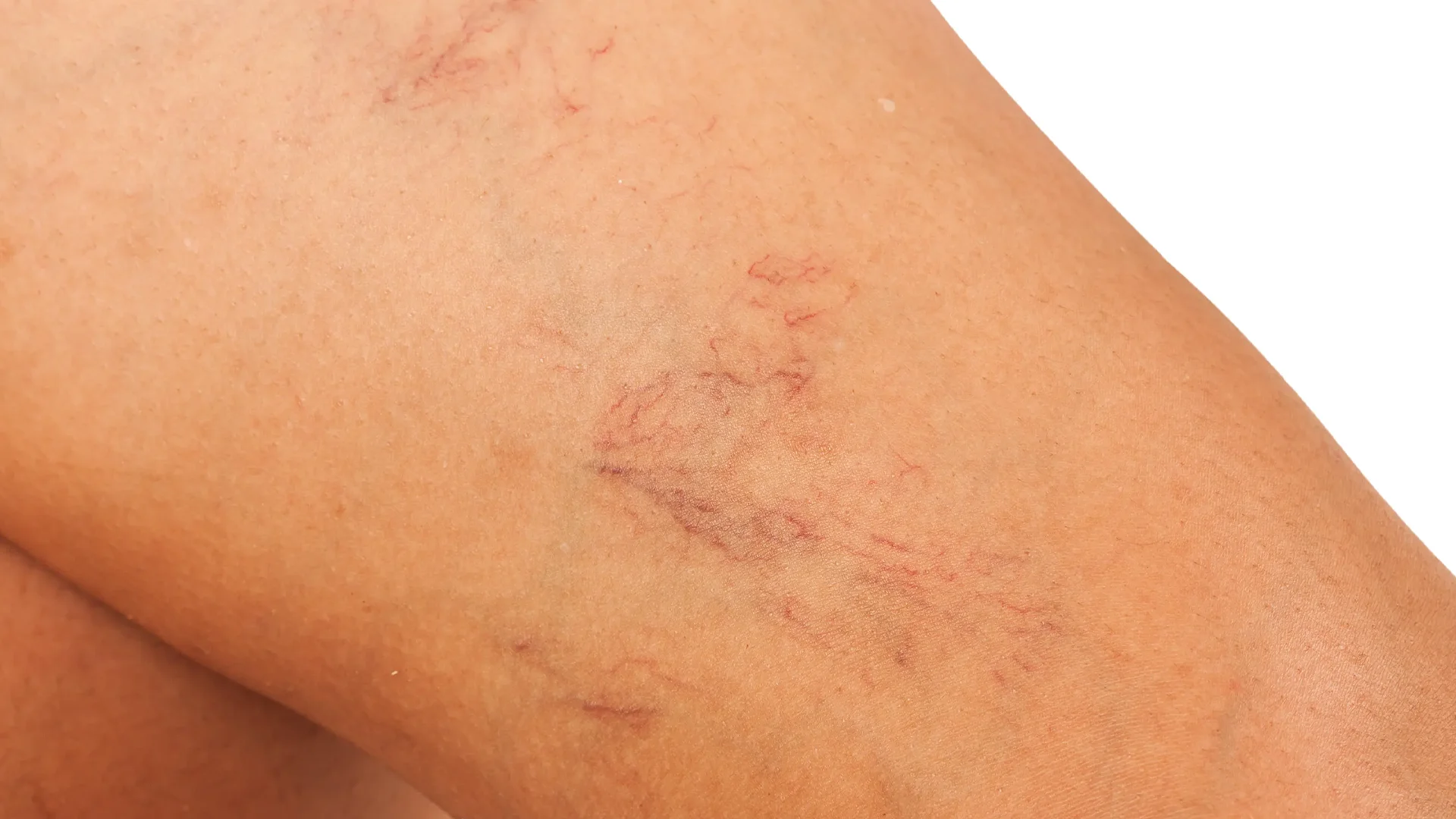
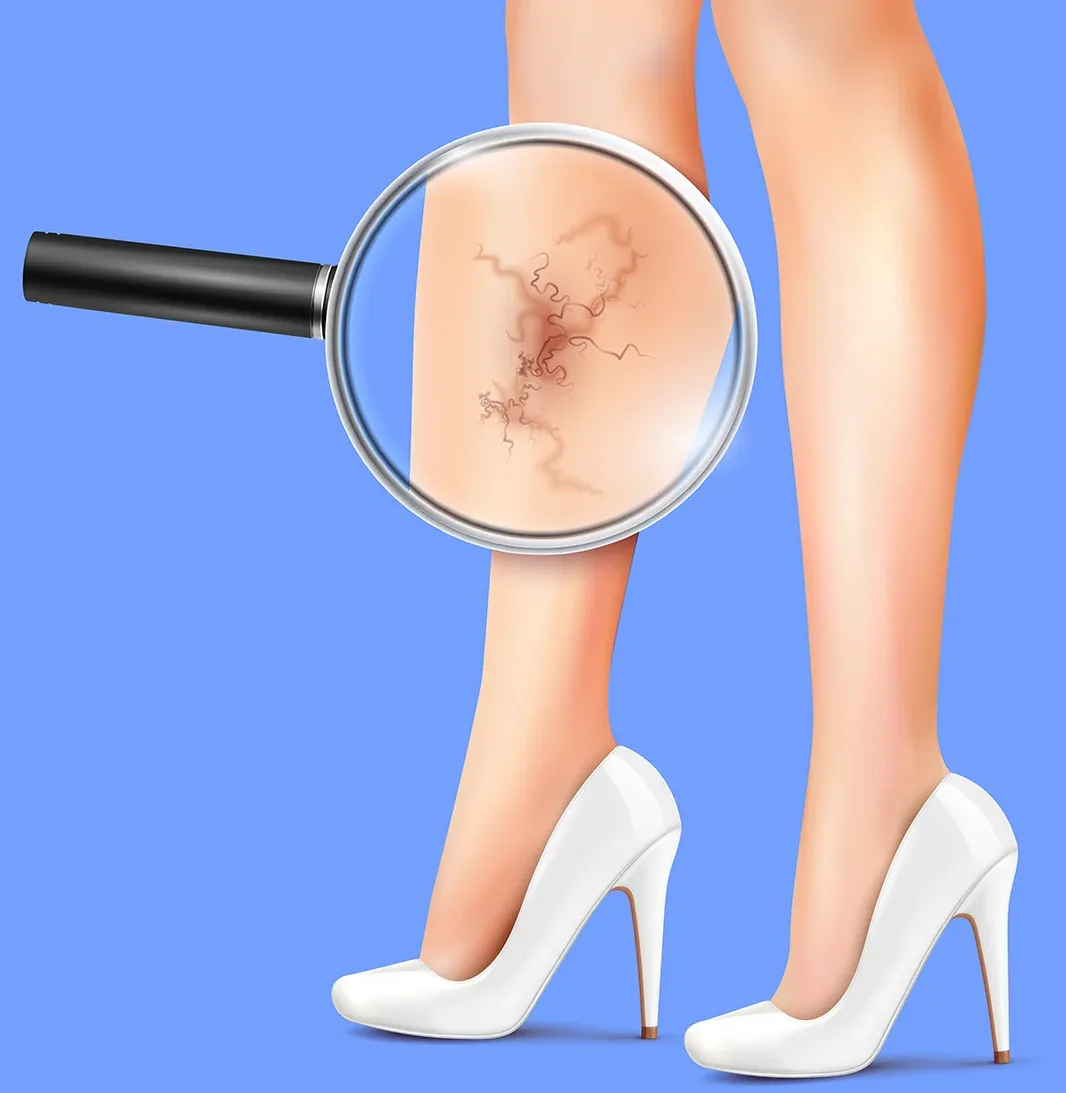
Spider veins (couperose) result from impaired blood circulation in localized areas.
The vessel walls widen and thicken, making capillaries or small veins visible. These vessels function poorly, and if the wall is damaged, blood leaks into tissues, forming spider veins.
Common areas: nose, cheeks, temples, legs, chest.
Causes:
Improper tanning, hormonal imbalances, excessive or insufficient physical activity, osteochondrosis, urinary or hepatobiliary disorders, loss of skin turgor, demodicosis.
This condition can be effectively treated using a new-generation long-pulse Nd:YAG laser (Cynosure, USA).
The laser wavelength is absorbed by hemoglobin and oxyhemoglobin, converting to heat, which coagulates the vessel wall internally. This method is considered one of the safest and most effective.
Results:
Indications:
Contraindications:
Tanning within the past 3 weeks, certain medications (e.g., tetracyclines), pregnancy, lactation, keloid tendency, decompensated diabetes, acute inflammatory diseases, cancer, epilepsy.
Aftercare
- Temporary redness (1–3 days) and swelling may occur.
- Use sunscreen for 4 weeks.
- Avoid hot showers for 3–5 days.
- No compression garments needed.
- Normal activities can be resumed immediately.
Spider veins (couperose) result from impaired blood circulation in localized areas.
The vessel walls widen and thicken, making capillaries or small veins visible. These vessels function poorly, and if the wall is damaged, blood leaks into tissues, forming spider veins.
Common areas: nose, cheeks, temples, legs, chest.
Causes:
Improper tanning, hormonal imbalances, excessive or insufficient physical activity, osteochondrosis, urinary or hepatobiliary disorders, loss of skin turgor, demodicosis.
This condition can be effectively treated using a new-generation long-pulse Nd:YAG laser (Cynosure, USA).
The laser wavelength is absorbed by hemoglobin and oxyhemoglobin, converting to heat, which coagulates the vessel wall internally. This method is considered one of the safest and most effective.
Results:
Indications:
Contraindications:
Tanning within the past 3 weeks, certain medications (e.g., tetracyclines), pregnancy, lactation, keloid tendency, decompensated diabetes, acute inflammatory diseases, cancer, epilepsy.
Aftercare
- Temporary redness (1–3 days) and swelling may occur.
- Use sunscreen for 4 weeks.
- Avoid hot showers for 3–5 days.
- No compression garments needed.
- Normal activities can be resumed immediately.